Turf Drainage and Base Corrections Overview
Drainage failure is the most consequential problem in synthetic turf — and in The Woodlands and north Houston corridor, it is also among the most common. The region receives substantial annual rainfall concentrated in spring and fall, and Montgomery County's clay-heavy soils do not absorb water readily. When synthetic turf drainage is inadequate or compromised, the result is standing water that takes hours or days to clear, base saturation that leads to surface deformation, and turf that simply cannot be used when conditions should allow it.
Artificial Grass of The Woodlands approaches drainage correction diagnostically. The visible symptom — water pooling on the surface after rain — is rarely the complete picture. We evaluate drainage failures by tracing the full water path: where rain enters the system, how it moves through the infill into the base aggregate, where it exits the base into the subgrade or a drainage outlet, and where it is being blocked or misdirected. That full-path understanding is what allows us to correct failures properly rather than apply surface-level remedies that do not last.
The specific soil and topographic conditions of The Woodlands and surrounding communities create predictable drainage failure patterns. Clay subgrade beneath the base aggregate can become saturated and prevent downward percolation even when the base itself is intact. Properties that drain toward protected greenbelt corridors along Spring Creek or Lake Woodlands shoreline face constraints on where drainage can be directed. Properties under dense loblolly pine canopy have organic matter decomposition in the soil profile that changes drainage behavior over time as roots grow through the base system. We account for these community-specific conditions in every drainage correction we scope.
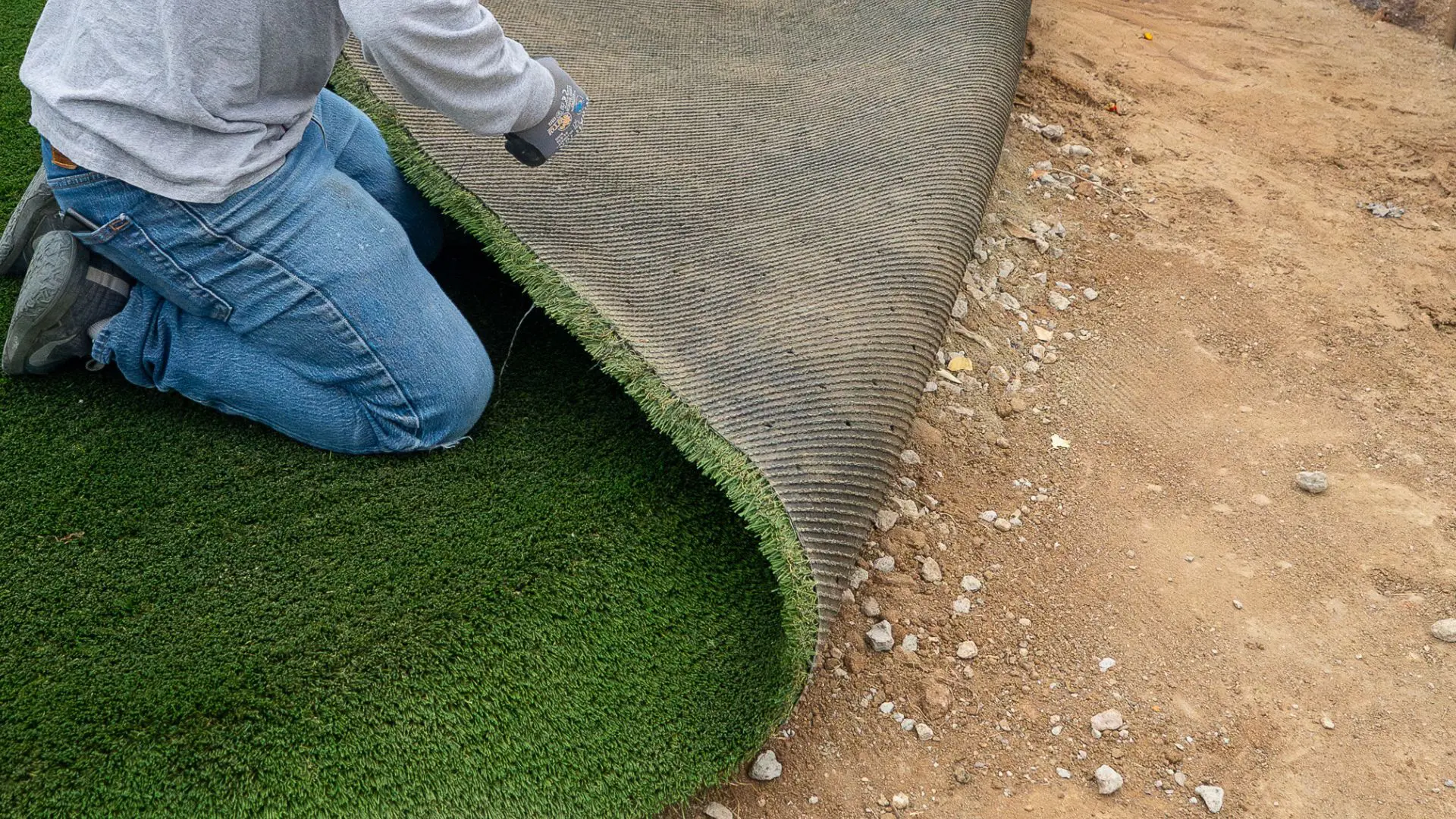
Base corrections that accompany drainage work involve lifting the turf, assessing and correcting the base aggregate, reestablishing grade where settling has created low points, and reinstalling the surface with drainage routing that functions correctly under the actual site conditions. These are not quick cosmetic fixes — they require accessing the full base system, which means we treat every drainage correction engagement with the same planning rigor we bring to new installations.
What Is Included in Turf Drainage and Base Corrections
Drainage correction scope is developed after a full drainage path assessment. The components below represent the core services delivered, combined based on the specific failure at each site.
- Full Drainage Path Assessment - Trace the complete water movement path from surface to outlet, identifying where the failure occurs in the system rather than just where the symptom appears.
- Subgrade Percolation Evaluation - Assess whether clay or compacted subgrade beneath the base is blocking downward drainage movement and determine what correction is needed at that layer.
- Base Lift and Inspection - Lift affected turf panels to access the base aggregate, inspect aggregate condition and grade, and identify base settling, organic intrusion, or aggregate migration as contributing factors.
- Grade Correction and Regrading - Correct grade across the base to eliminate flat spots and low points where water accumulates, establishing a positive slope toward the drainage outlet.
- Drainage Infrastructure Improvements - Install or improve drainage channels, perforated pipe, French drain connections, or outlet systems where the existing infrastructure is insufficient for the site's rainfall load.
- Turf Reinstallation with Corrected Base - Reinstall lifted turf panels across the corrected base, re-seam where needed, and restore infill to functional depth.
- Post-Correction Drainage Verification - Verify drainage performance under simulated or observed rain conditions before closing out the project.
Process Steps for Turf Drainage and Base Corrections
Drainage corrections require a diagnostic-first approach because the visible failure rarely reveals the full scope of what needs to be corrected. Our process builds in the assessment work before any corrective action begins.
1. Drainage Failure Assessment
We assess the pooling pattern, probe the base, evaluate subgrade percolation, and trace the drainage outlet to identify where in the system failure is occurring.
2. Correction Scope Confirmation
Based on the assessment, we confirm what corrective work is needed, what the expected outcome is, and what access will be required into the base system.
3. Turf Lift and Base Access
Turf panels are carefully lifted in the correction zone, base aggregate is inspected and assessed, and the scope of grade correction and drainage infrastructure improvement is confirmed.
4. Base Correction, Regrading, and Infrastructure Improvement
Grade is corrected across the affected zone, drainage infrastructure is installed or improved, and base aggregate is restored to the correct depth and compaction.
5. Turf Reinstallation and Verification
Turf panels are reinstalled, seams are secured, infill is restored, and drainage performance is verified before the project is closed out.
Drainage Correction Applications Across The Woodlands and North Corridor
Drainage failures in synthetic turf follow predictable patterns in this market. The applications below represent the most common scenarios we address.
Clay Subgrade Saturation in Residential Yards
Residential installations over clay-dominant subgrade in Conroe, Tomball, and Magnolia frequently develop saturation problems where the base aggregate drains correctly but the clay beneath retains water and prevents the system from fully clearing between rain events.
Low Point Pooling in Village Common Areas
HOA common area turf installations across The Woodlands villages develop pooling at grade low points where original base grading was insufficient or where base settlement over time has created drainage-trapping depressions.
Root-Displaced Base Sections Under Canopy
Properties under significant loblolly pine or hardwood canopy where roots have grown into the base aggregate and displaced it — changing the grade and creating new low points that pool after rain.
Commercial Property Drainage Failures
Commercial turf installations at office and retail properties in The Woodlands where inadequate drainage creates standing water at building entries, pathway intersections, or high-visibility frontage zones.
Why Property Owners Choose Artificial Grass of The Woodlands for Drainage Corrections
Drainage problems are infrastructure problems, not surface problems. Property owners who have had drainage-only remedies applied — typically infill additions or surface scarification — without base-level correction know this: the pooling returns. Artificial Grass of The Woodlands addresses drainage failures at the level where they originate, which requires lifting the surface, correcting the base, and restoring the full drainage path. That approach costs more than a surface-level remedy but actually solves the problem.
Pricing Factors for Turf Drainage and Base Corrections
Drainage correction costs depend on how deep in the system the failure occurred and how much of the installation needs to be accessed and corrected. The factors below drive most variation between projects.
Failure Location in the Drainage System
Failures at the base aggregate level are more straightforward to access than failures at the subgrade level, which require deeper excavation to address.
Affected Surface Area
Drainage failures that affect a single localized zone are less expensive to correct than widespread drainage inadequacy that requires base-level regrading across a large installation.
Drainage Infrastructure Required
Sites that need perforated pipe, French drain connections, or improved outlet structures require material and installation costs beyond basic base correction and regrading.
Subgrade Saturation Severity
Clay subgrade that requires subsoil amendment or percolation improvement adds corrective scope and material cost beyond base-level regrading alone.
Root Intrusion Correction
Base sections where root systems have grown into the aggregate require careful hand excavation and root management before the base can be corrected, adding time and labor cost.
Turf Reinstallation Scope
The amount of turf that must be lifted and reinstalled, and whether seam rebonding is required across the corrected zone, affects reinstallation material and labor cost.
Service Area Coverage
We provide turf drainage and base corrections across The Woodlands, TX, including Spring, Shenandoah, Conroe, Tomball, Magnolia, Oak Ridge North, Porter, Humble, Cypress, Montgomery, Willis, Pinehurst, Cut and Shoot, and Jersey Village.
Related Services
Turf Repair and Seam Fixes
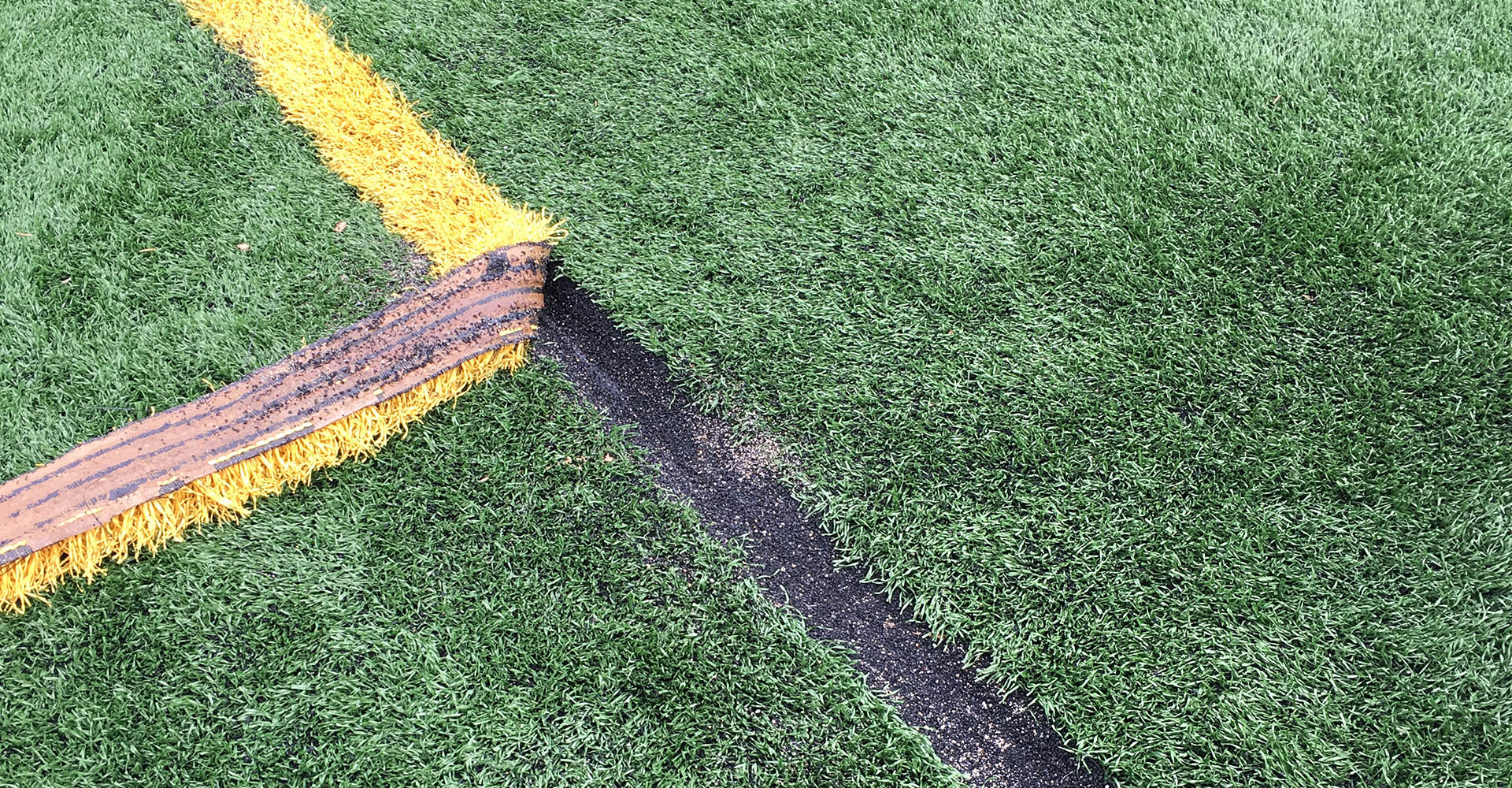
Corrective repairs for lifted seams, wrinkling, edge movement, and localized wear on existing turf.
Learn More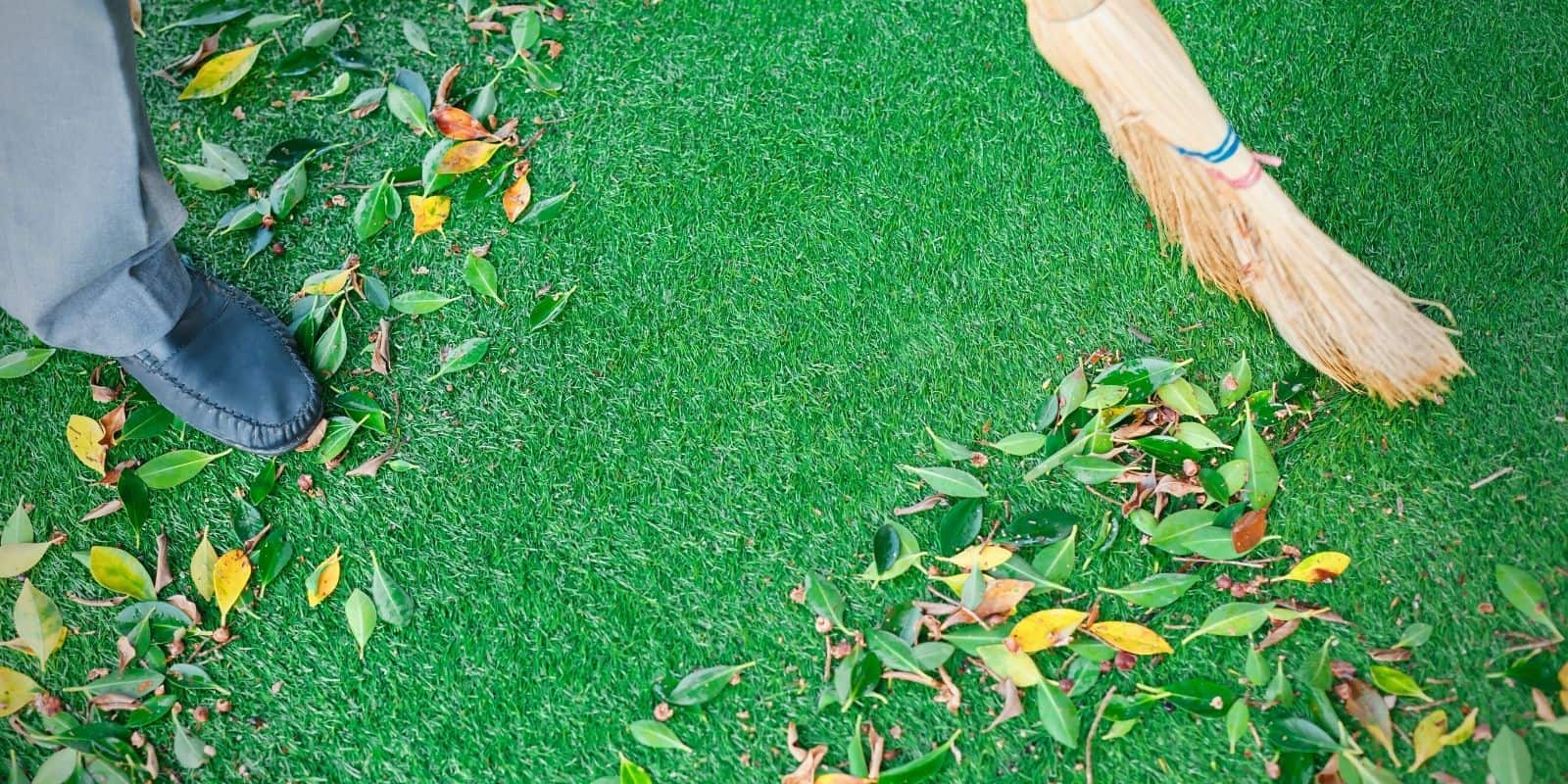
Turf Cleaning and Maintenance
Scheduled turf cleaning, decompaction, grooming, and seasonal maintenance for long-term performance.
Learn More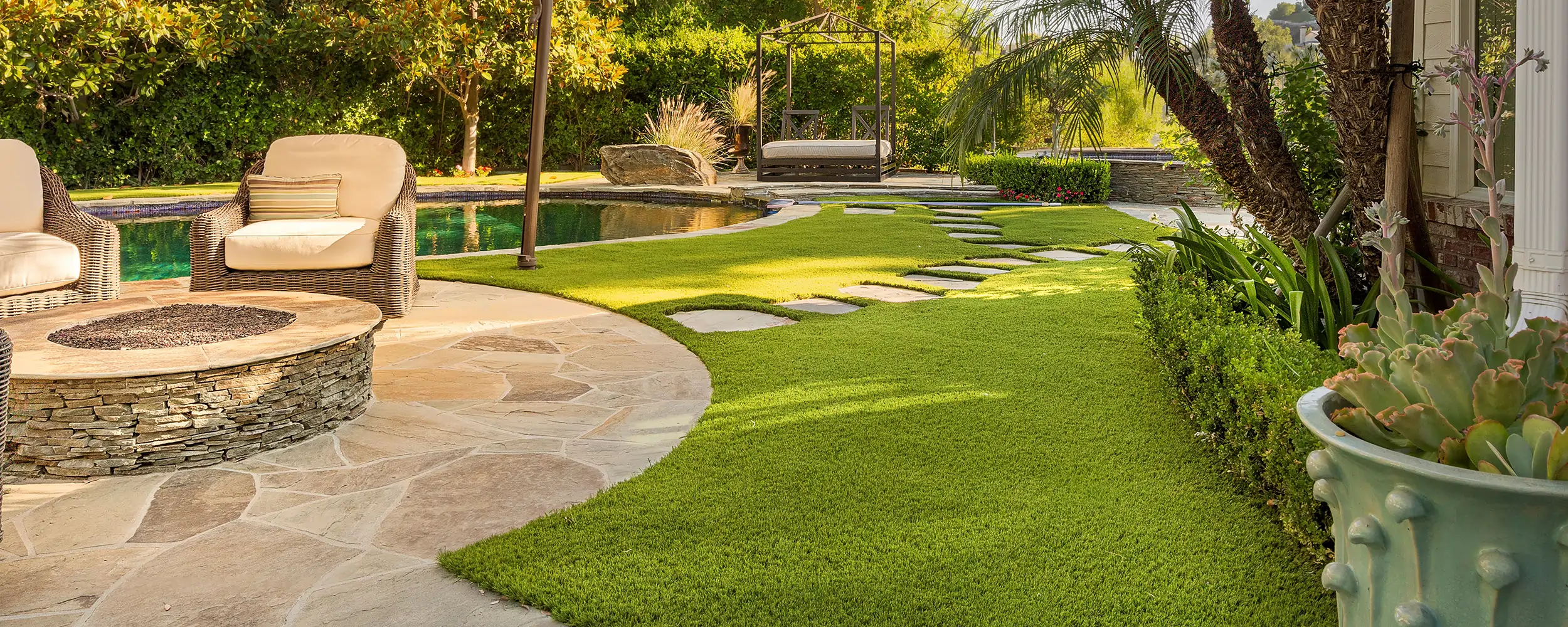
Residential Artificial Turf Installation
Durable landscape turf systems for front yards, backyards, pool zones, and everyday family use.
Learn More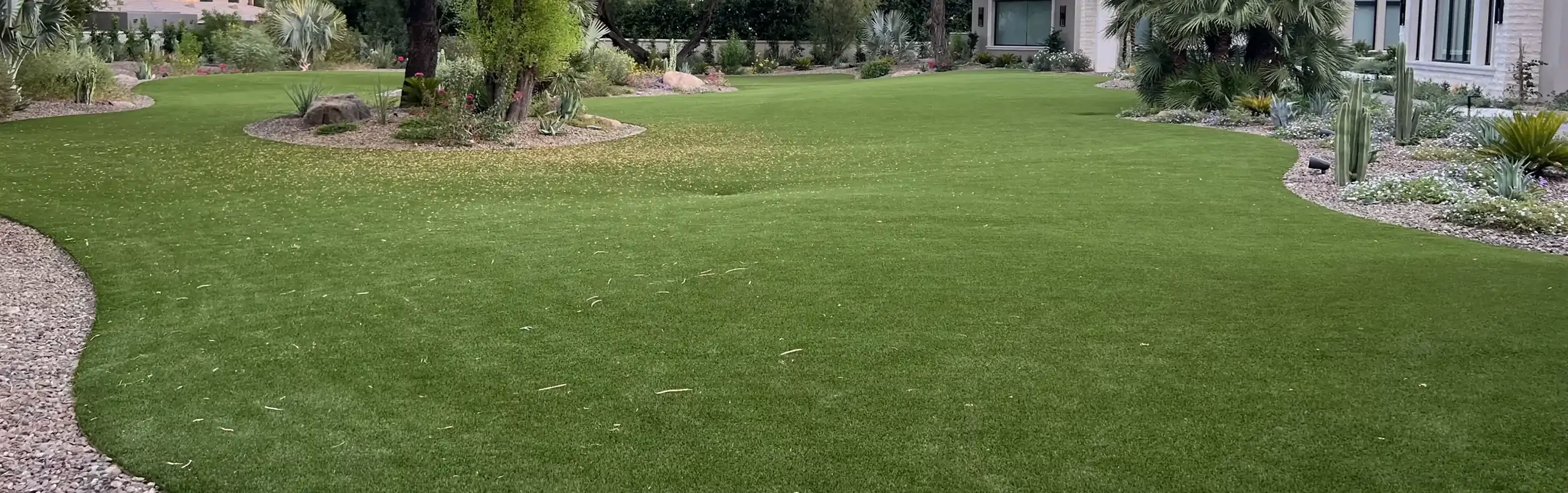
Commercial Artificial Turf Installation
Synthetic turf planning and installation for office, retail, and multi-site commercial properties.
Learn MoreFrequently Asked Questions About Turf Drainage and Base Corrections
Why does water pool on my synthetic turf even though it seemed to drain well when it was first installed?
Drainage performance in synthetic turf degrades over time for several reasons: infill compaction reduces permeability, base aggregate can compact or migrate and reduce the grade slope, organic matter from canopy debris can clog drainage pathways, and subgrade clay can become increasingly resistant to percolation as it cycles through wet and dry seasons. We assess which of these factors is driving the failure at your specific installation.
Can drainage be improved without lifting the turf surface?
In some cases, surface-level drainage improvements such as outlet clearing or perimeter channel additions can reduce pooling. But if the failure is at the base or subgrade level, surface-only remedies will not fully resolve the problem. We are honest about which approach is appropriate for each situation.
My drainage problem only occurs after heavy storms. Does that mean the fix is smaller?
Not necessarily. The north Houston corridor receives storm events that deliver several inches of rain quickly, and a drainage system that handles moderate rain but fails under heavy events often has a capacity limitation at the base or outlet level. We assess the system's design capacity against the actual rainfall load it needs to handle.
How do you protect existing tree roots when accessing the base for drainage corrections?
Root protection is a planning constraint, not an obstacle to drainage work. We identify the critical root zone radius for nearby trees, design base access and correction to avoid that zone, and use hand methods near roots rather than mechanical equipment.
Can drainage corrections be done on an existing installation without full replacement?
In most cases, yes. Drainage corrections involve lifting the affected turf sections, correcting the base, and reinstalling the surface rather than replacing it. Whether the existing turf is in good enough condition to reinstall is assessed during the lift and inspection phase.
How do you handle drainage on properties that slope toward Spring Creek or protected greenbelts?
Properties adjacent to Spring Creek Greenway, Lake Woodlands, or protected riparian buffers require drainage that routes water away from those sensitive areas. We design outlet solutions that discharge to appropriate stormwater infrastructure rather than directing drainage toward protected natural areas.