
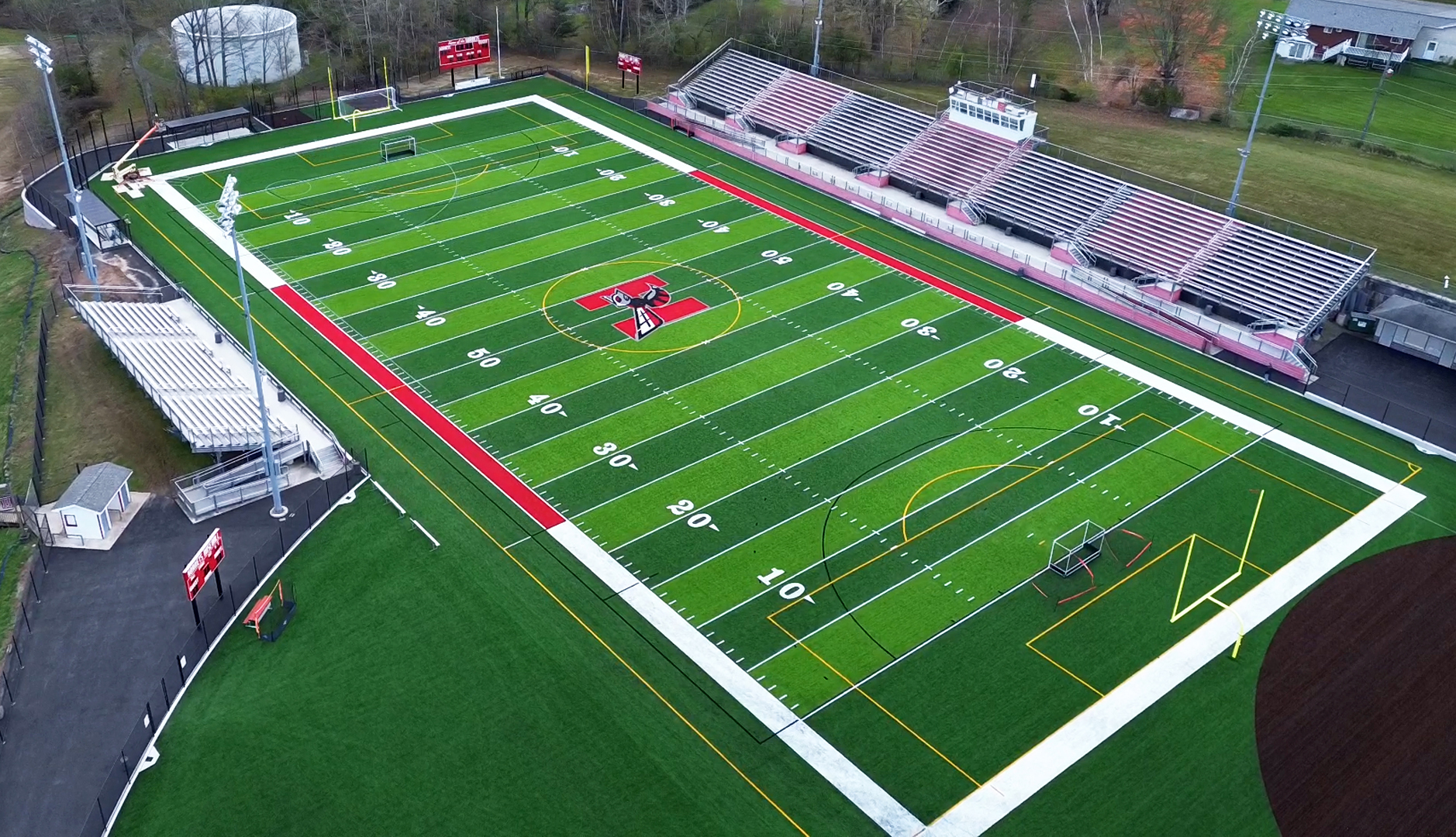
Sports Field Turf Installation Overview
Sports turf installation in The Woodlands and north Houston corridor serves a youth and adult athletics community that trains year-round. The Woodlands High School and Conroe ISD athletic programs, Tomball ISD and Magnolia ISD sports facilities, and the private training facilities that have developed along the I-45 corridor north of Houston all represent demand for synthetic athletic surfaces that can handle intensive use without the recovery cycles that natural grass requires.
Artificial Grass of The Woodlands installs sports turf for training grids, multi-sport practice fields, conditioning lanes, lacrosse and soccer practice areas, and private athletic training facilities. Each application has specific performance requirements: correct pile height for the sport, appropriate infill density for foot plant stability, and drainage capacity sufficient for training to resume quickly after the heavy rain events that are common throughout the north Houston area during spring and early fall.
The north corridor's sports culture is driven partly by the strong performance tradition at Woodlands-area high schools and the competitive youth athletics infrastructure that serves families across Alden Bridge, Sterling Ridge, and the broader Conroe ISD service area. Private training facilities staffed by former collegiate and professional athletes have expanded along the corridor, and many of those facilities request sports turf that supports specific movement patterns — agility ladder work, lateral cutting drills, and sport-specific conditioning that demands a surface that performs under repetitive high-load movement.
Base engineering for sports applications is more demanding than for landscape turf. Compaction depth, drainage rate, and seam placement all affect how the surface performs under athletic use and how it holds up through years of intensive conditioning. We approach sports installations with the same planning discipline we bring to commercial projects — detailed scope, confirmed material specification, and production sequencing that delivers a surface that performs from the first training session.
What Is Included in Sports Field Turf Installation
Sports turf installations are scoped to the specific sport, traffic pattern, and facility requirements. The delivery framework below applies to all athletic surface projects.
- Athletic Use Assessment and Scope Definition - Document which sports and training activities will use the surface, expected weekly session hours, athlete count, and cleated versus non-cleated use to determine the correct specification.
- High-Load Base Engineering - Design base compaction depth and aggregate specification to handle the repetitive high-load impact of athletic movement without base migration or surface deformation over time.
- Drainage Capacity for Training Continuity - Engineer drainage rate to restore surface usability within a timeframe that keeps training schedules intact after north Houston rainfall events.
- Sport-Specific Turf and Infill Selection - Select pile height, blade architecture, and infill density based on the foot plant requirements, movement patterns, and traction expectations of the primary sport.
- Field Marking Integration - Integrate painted or inlaid field markings appropriate to the sport, sized and positioned to the correct dimensional standard.
- Seam Engineering for Lateral Load - Plan seam locations to avoid high-load zones and use seaming methods appropriate for athletic surfaces that experience directional loading from cutting movements.
- Facility Handoff and Maintenance Protocol - Review the completed surface with the athletic director or facility manager and provide a maintenance schedule that keeps the surface performing at the correct specification.
Process Steps for Sports Field Turf Installation
Athletic surface installations require more precise base engineering than landscape applications. Our process builds in the technical verification steps that sports performance demands.
1. Use Assessment and Technical Specification
We document athletic use requirements, evaluate the site for drainage capacity and base stability, and develop a technical specification for base, turf, and infill before any work begins.
2. Scope and Schedule Confirmation
Base depth, drainage design, turf product, infill specification, and marking layout are confirmed with the facility contact before production begins.
3. Existing Surface Removal and Base Construction
The existing surface is removed, subgrade is excavated and prepared to the specified depth, drainage aggregate is installed, and the base is compacted to the required density for athletic load.
4. Turf Installation, Seaming, and Infill
Turf panels are placed and directionally aligned, seamed with athletic-grade adhesive and fastening, and infilled to the depth specified for the target sport's foot plant requirement.
5. Marking Application and Surface Inspection
Field markings are applied and verified against dimensional standards. The surface is inspected for seam consistency, infill uniformity, and drainage function before the facility walkthrough.
Sports Turf Applications Across The Woodlands and North Houston Corridor
Sports turf serves a range of athletic facility types across the north corridor, from institutional school fields to private training centers.
Conroe ISD and Tomball ISD Practice Facilities
Middle school and high school practice fields for football, soccer, lacrosse, and conditioning programs request sports turf that allows year-round training without weather-dependent closures.
Private Athletic Training Centers
Speed and agility training facilities, sport-specific academies, and performance centers along the I-45 and FM 1960 corridor install sports turf for conditioning lanes, movement training zones, and multi-sport practice areas.
HOA and Residential Club Multi-Sport Areas
Community clubs and HOA amenity facilities across Woodlands villages and Spring-area master-planned communities install multi-sport turf surfaces that serve multiple community athletic programs.
Private Residential Training Zones
Families with student-athletes in Conroe ISD and Tomball ISD programs install residential-scale training zones — agility grids, conditioning strips, and kicking areas — on larger lot properties in Sterling Ridge and Carlton Woods.
Why Athletic Facilities Choose Artificial Grass of The Woodlands
Athletic facilities in the north corridor choose Artificial Grass of The Woodlands because we build sports surfaces that perform under real athletic load, not surfaces that look like sports fields but play like landscape turf. The base engineering, infill specification, and seam placement decisions we make during design are what determines whether a training surface holds up through five seasons of conditioning use or requires corrective work after two. We design for the long-term performance requirement, not the short-term visual impression.
Pricing Factors for Sports Field Turf Installation
Sports turf costs more per square foot than landscape turf because of the higher base specification and material performance requirements. The factors below drive most of the variation between projects.
Field Area and Sport Configuration
Total turf area and the dimensional requirements of the sport determine material volume and installation scope. Multi-sport configurations with multiple field markings add design and application work.
Base Depth and Compaction Specification
Athletic base systems require greater aggregate depth and higher compaction density than landscape applications. Higher-traffic and cleated-sport applications require more base investment.
Drainage Rate Requirement
Facilities that need rapid post-rain drainage to maintain training schedules require more robust drainage infrastructure than standard landscape installations.
Turf Performance Specification
Sport-specific turf products calibrated for foot plant stability, traction, and pile recovery cost more than standard landscape turf but perform to a different functional standard.
Field Marking Integration
Painted and inlaid field markings add material and application cost that scales with the number of sports and the complexity of the dimensional layout.
Facility Scheduling Constraints
Installations that must work around an active athletic schedule, school calendar, or facility operating hours require phased planning that can add coordination cost.
Service Area Coverage
We provide sports field turf installation across The Woodlands, TX, and extend service to Spring, Shenandoah, Conroe, Tomball, Magnolia, Oak Ridge North, Porter, Humble, Cypress, Montgomery, Willis, Pinehurst, Cut and Shoot, and Jersey Village.
Related Services
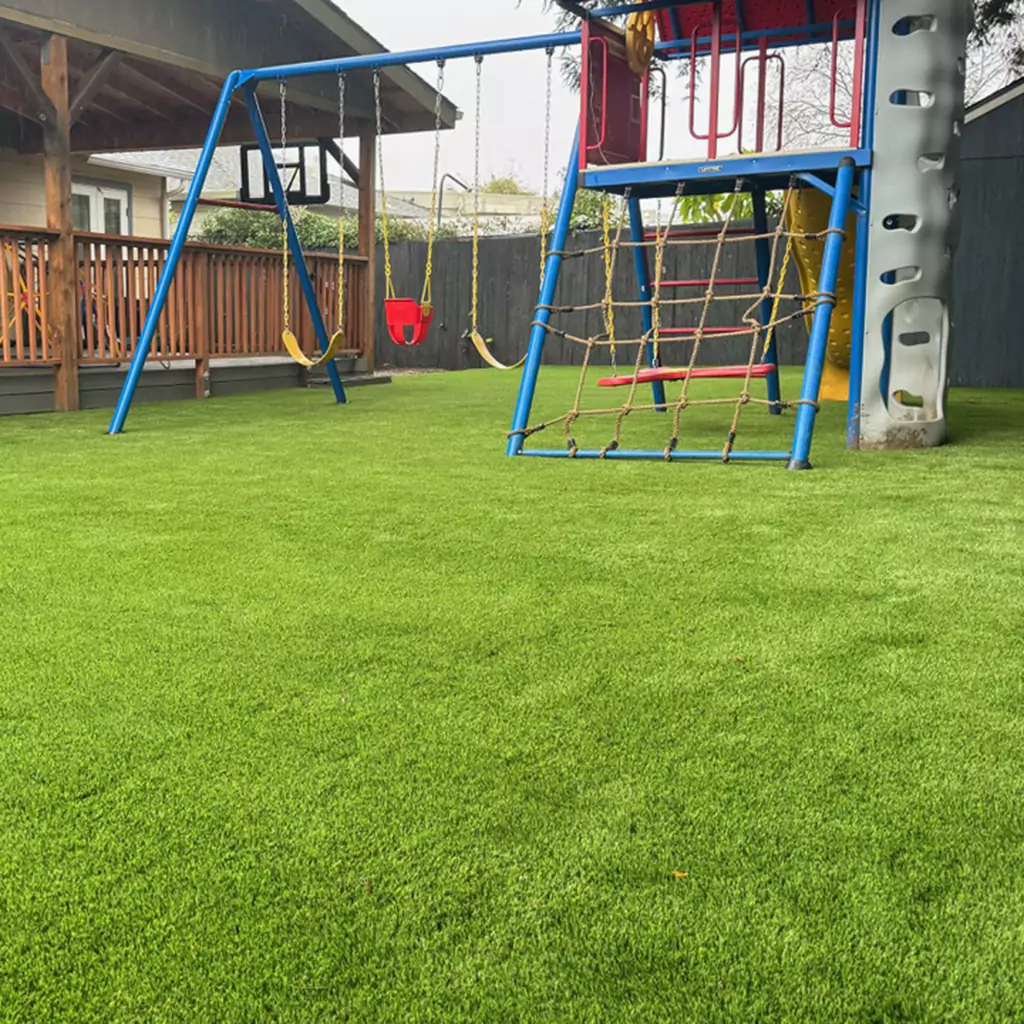
Playground Turf Installation
Impact-conscious playground turf systems designed for school, childcare, HOA, and private play spaces.
Learn More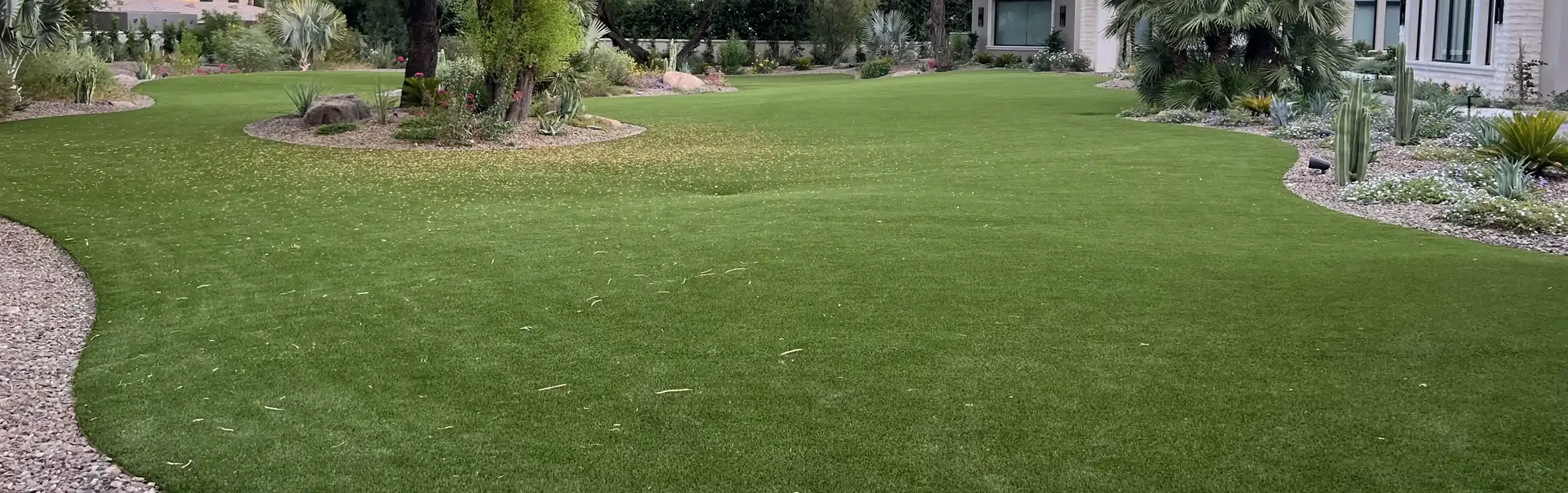
Commercial Artificial Turf Installation
Synthetic turf planning and installation for office, retail, and multi-site commercial properties.
Learn More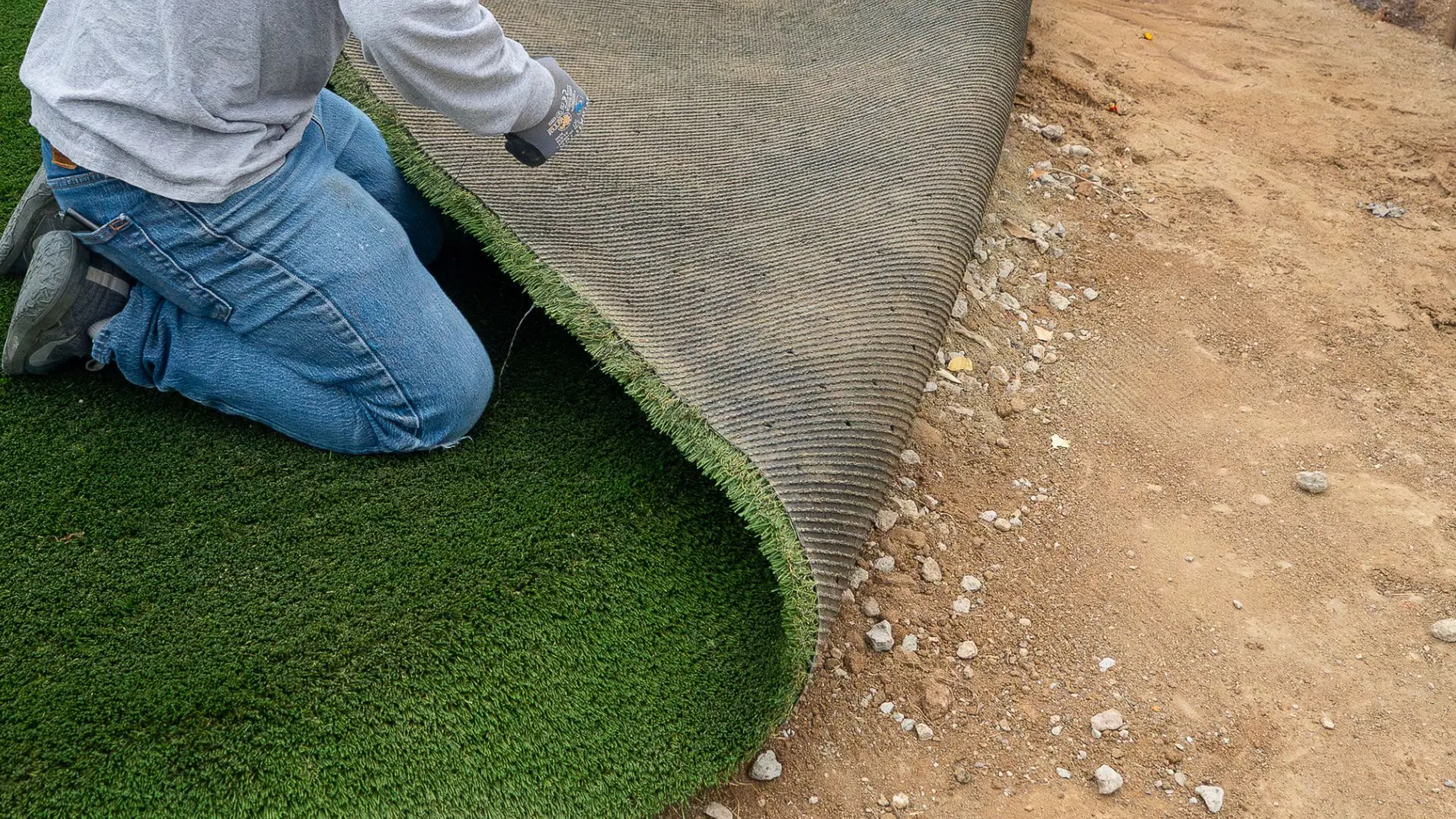
Turf Drainage and Base Corrections
Drainage-focused remediation for puddling, runoff pressure, base instability, and surface pooling problems.
Learn More
Turf Cleaning and Maintenance
Scheduled turf cleaning, decompaction, grooming, and seasonal maintenance for long-term performance.
Learn MoreFrequently Asked Questions About Sports Field Turf Installation
What pile height is appropriate for soccer versus football training surfaces?
Soccer typically uses a longer pile than football to achieve ball roll characteristics appropriate to the sport. Football and multi-directional cutting sports often specify a denser, shorter pile that provides better foot plant stability. We recommend pile specification based on the primary sport and how multiple sports will share the surface.
How quickly can the field be used after installation?
Most sports turf installations are ready for light use within 24 hours of installation completion and for full athletic training within 48 hours. We confirm the specific timeline based on infill settling requirements and weather conditions during installation.
Can synthetic sports turf handle cleated athletes?
Yes. Sports turf is specifically engineered for cleated use, with base and infill specifications that provide the stability for cleats to function correctly without penetrating into the base aggregate.
How do you handle drainage for fields near the Spring Creek Greenway or other low-lying areas?
Sites near creek corridors or low-lying areas require careful drainage outlet planning to ensure field drainage does not create erosion or direct runoff toward protected riparian areas. We address that during site review before any work begins.
Do Conroe ISD or Tomball ISD facilities have specific surface standards we need to meet?
School district facility standards vary by campus and application. We work with district facility managers to confirm any specific surface performance or safety requirements before finalizing installation scope.
How is sports turf maintained differently from landscape turf?
Sports surfaces require regular infill grooming to redistribute compacted areas, more frequent seam and edge inspection given higher directional load, and periodic decompaction treatment in high-use zones. We provide a specific maintenance schedule based on training frequency and sport type.