Playground Turf Installation Overview
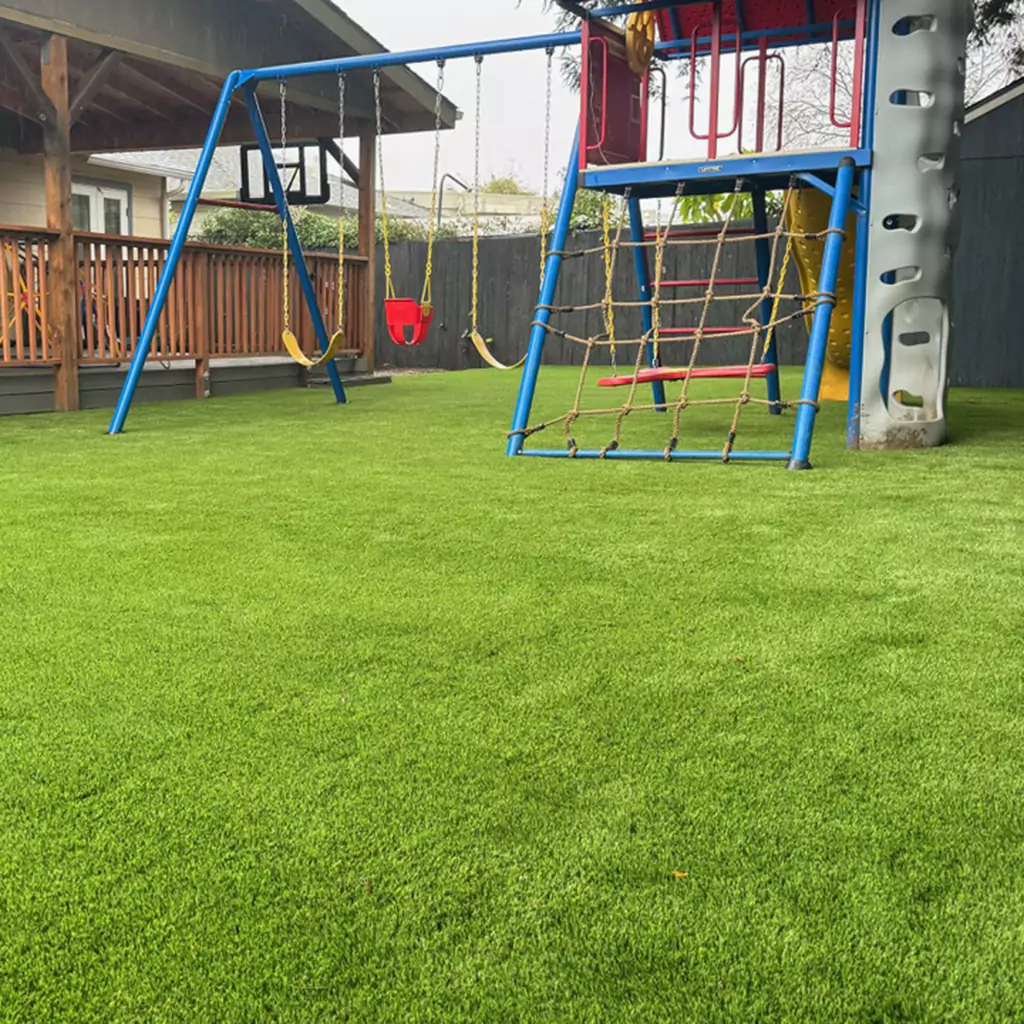
Playground turf installation in The Woodlands and surrounding communities serves a population of families who take outdoor play seriously. The interconnected trail system across all nine villages, the proximity to Spring Creek Greenway and the nature-oriented design ethic George Mitchell embedded into the community's planning, and the active school culture across Conroe ISD, Tomball ISD, and Magnolia ISD all contribute to a community where children's outdoor spaces are genuinely used — not left empty because the surface is unpleasant or unsafe.
Playground turf is fundamentally different from landscape or residential yard turf in one critical dimension: fall attenuation. A child falling from playground equipment onto a synthetic surface needs that surface to absorb impact to a standard that reduces injury risk. This is not a cosmetic requirement — it is a functional one that drives base system design, infill depth, and turf pile specification for every playground installation we complete.
Artificial Grass of The Woodlands installs playground surfaces for Conroe ISD school campuses, Tomball ISD elementary school grounds, private school play courts, HOA common area play zones across all nine Woodlands villages, childcare facility outdoor areas, and private residential family play spaces. Each application has a different impact attenuation requirement, traffic intensity, and maintenance expectation that shapes how we design the installation.
The Woodlands HOA structure means that most playground installations in the community fall within or adjacent to common areas governed by the Woodlands Association and its village covenants. We work with community managers and HOA boards to confirm that playground surfaces meet ASC standards for common area treatments and that the installation process respects adjacent landscaping, including the protected tree canopy that makes these community spaces distinctive.
What Is Included in Playground Turf Installation
Playground installations are scoped to the specific equipment layout, fall zone requirements, and facility type. The core delivery components are consistent across all playground projects.
- Fall Zone Assessment and Impact Attenuation Planning - Map the equipment fall zones and design infill depth and turf specification to meet the critical fall height protection requirement for the tallest piece of equipment in the play space.
- Drainage Engineering for Play Area Safety - Design drainage flow to keep the play surface dry after rain events, reducing mud transfer, surface pooling, and the closed-surface conditions that can make play areas unusable for hours after precipitation.
- Base Construction for High-Traffic Endurance - Build base compaction levels appropriate for playground traffic intensity, which is significantly higher per square foot than residential or commercial landscape applications.
- Turf and Infill Selection for Child Safety - Select turf products and infill materials that are non-toxic, do not produce loose particles that can be ingested or inhaled, and maintain consistent pile performance under heavy foot traffic.
- Equipment Border Transitions - Install precision transitions at equipment bases, post anchors, border timbers, fencing, and surrounding hardscape to eliminate trip hazards at surface interface points.
- ASC and Facility Compliance Review - Confirm that the installation meets HOA common area standards or school facility requirements before work begins so there are no post-installation compliance questions.
- Maintenance Guidance for Facility Staff - Provide written care instructions calibrated to the traffic level and debris conditions specific to the play space, so facility or HOA maintenance staff can maintain the surface effectively.
Process Steps for Playground Turf Installation
Playground installations require coordination with equipment layouts, fall zone requirements, and facility scheduling that standard landscape installs do not. Our process accounts for those coordination requirements.
1. Fall Zone Mapping and Site Assessment
We document the equipment layout, measure fall zone radii for each piece, evaluate existing drainage behavior, and identify any site constraints from adjacent trees, utility structures, or access limitations.
2. Impact Attenuation Design and Scope Confirmation
Base depth, infill specification, and turf product are selected to meet fall height protection requirements. Scope is confirmed with the facility manager or HOA representative before work is scheduled.
3. Surface Removal and Base Construction
Existing surface material is removed, subgrade is excavated and prepared, and base aggregate is installed and compacted to the required depth and density for playground use.
4. Turf Installation with Fall Zone Infill
Turf panels are placed and seamed across the play area, with infill installed to the depth specified for the critical fall height requirement throughout the fall zone coverage area.
5. Border Finishing and Facility Handoff
Equipment base transitions and surface borders are finished to eliminate trip hazards, the surface is inspected against the fall zone specification, and we review care protocols with the facility contact.
Playground Turf Applications Across The Woodlands and North Corridor
Playground turf serves a range of institutional, community, and residential settings across The Woodlands and the broader north Houston corridor.
Conroe ISD and Tomball ISD School Campuses
Elementary and middle school play courts across Conroe ISD and Tomball ISD request playground turf to provide safe, drainage-capable surfaces that remain usable after rain and reduce the mud transfer that affects building interiors.
Woodlands HOA Common Area Play Zones
HOA common area play spaces across the nine villages are maintained to a visual and functional standard that synthetic turf supports more consistently than live grass under heavy child traffic.
Private School and Childcare Facilities
Private school campuses and licensed childcare facilities request playground turf installations that meet licensing surface safety requirements while being easier to maintain than loose-fill alternatives.
Residential Family Play Yards
Families with dedicated backyard play equipment in Alden Bridge, Sterling Ridge, and Cochran's Crossing install playground turf under and around equipment to eliminate the mud zones that bare soil creates after rain.
Why Schools and Community Facilities Choose Artificial Grass of The Woodlands
Institutions and HOA facilities in The Woodlands choose Artificial Grass of The Woodlands because we understand the compliance environment, the community's design standards, and what children's play surfaces actually need to do. We do not apply a residential spec to a school playground — we design to the specific fall height requirement, traffic intensity, and facility maintenance capacity of each installation.
Pricing Factors for Playground Turf Installation
Playground turf projects cost more per square foot than standard landscape turf because of the infill depth, safety specification, and precision detailing at equipment transitions. The factors below drive most cost variation.
Critical Fall Height and Infill Depth
Higher equipment requires more infill depth to meet attenuation requirements. Infill depth is the single largest cost variable in playground turf because it directly scales with the safety specification.
Play Area Square Footage
Total coverage area including fall zones determines material volume and installation labor. Fall zones often extend well beyond the equipment footprint, increasing the effective turf area.
Equipment Transition Complexity
Multiple pieces of equipment with different base anchors, post configurations, and fall zone overlaps require more precision transition work than open-field installations.
Existing Surface Removal
Removal of existing wood chips, pea gravel, or deteriorating rubber surfaces requires different equipment and disposal logistics than sod removal.
Drainage Infrastructure Requirements
School campuses and institutional facilities often have more complex drainage requirements that integrate the playground surface with site-wide storm management systems.
Scheduling Constraints
Installations that must be completed outside of school hours, during school breaks, or in phases around facility operations add coordination overhead that affects total project cost.
Service Area Coverage
We provide playground turf installation across The Woodlands villages and extend service to Spring, Shenandoah, Conroe, Tomball, Magnolia, Oak Ridge North, Porter, Humble, Cypress, Montgomery, Willis, Pinehurst, Cut and Shoot, and Jersey Village.
Related Services
Residential Artificial Turf Installation
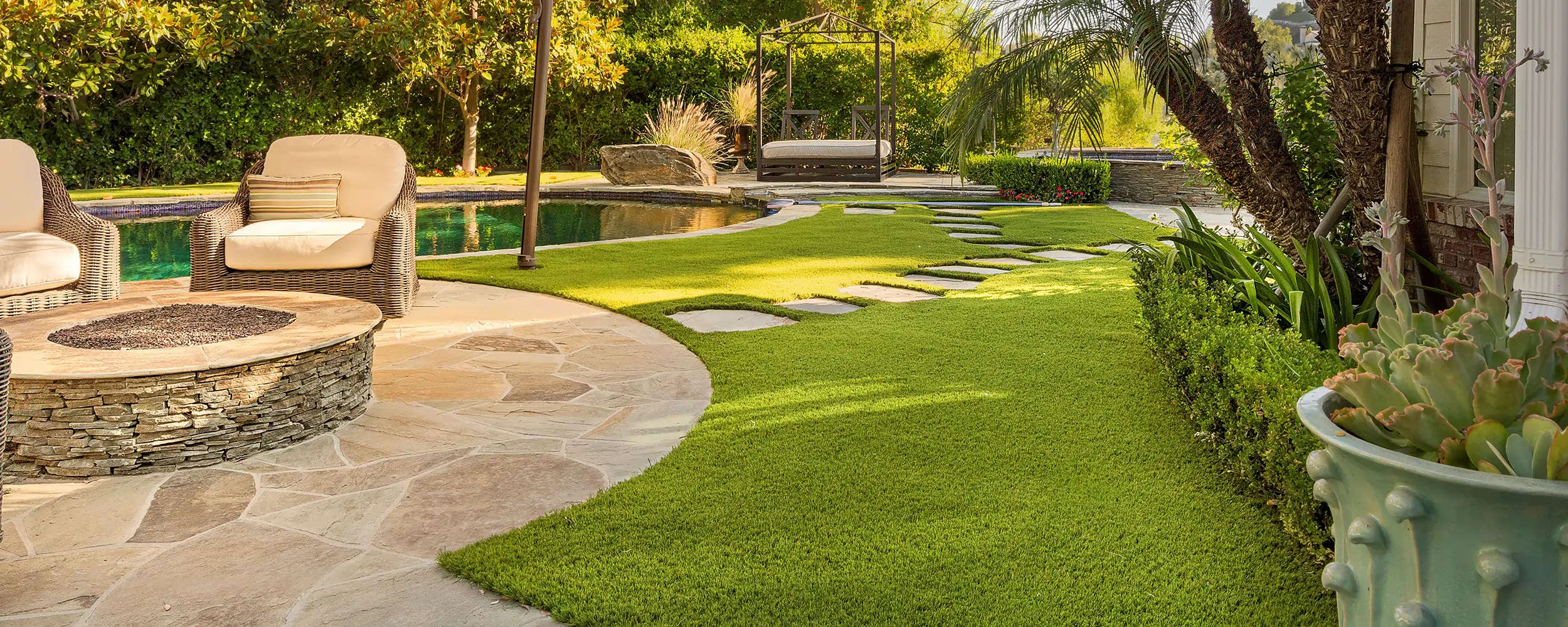
Durable landscape turf systems for front yards, backyards, pool zones, and everyday family use.
Learn More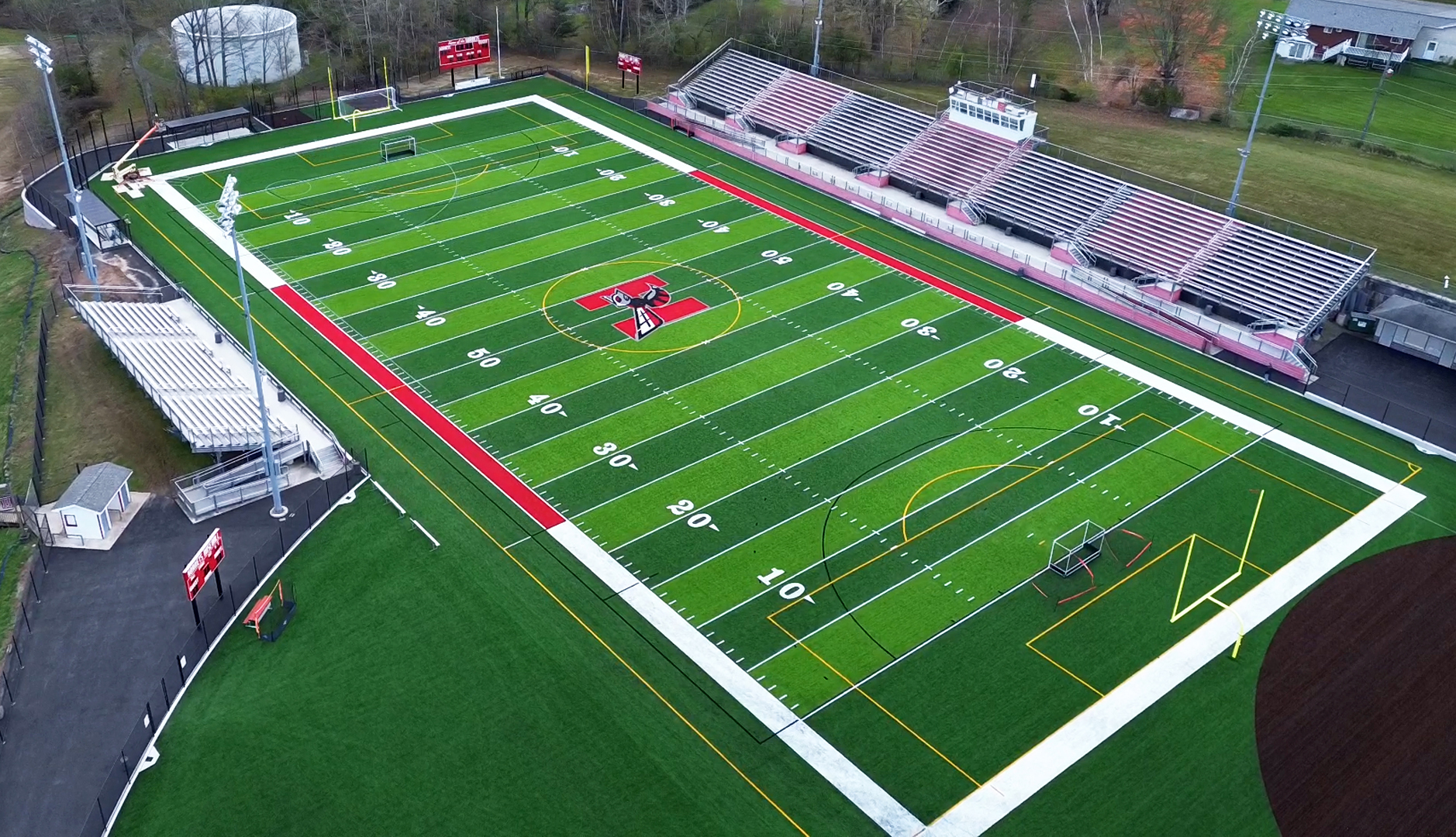
Sports Field Turf Installation
Athletic-use synthetic turf installation for training zones, practice fields, and high-frequency play surfaces.
Learn More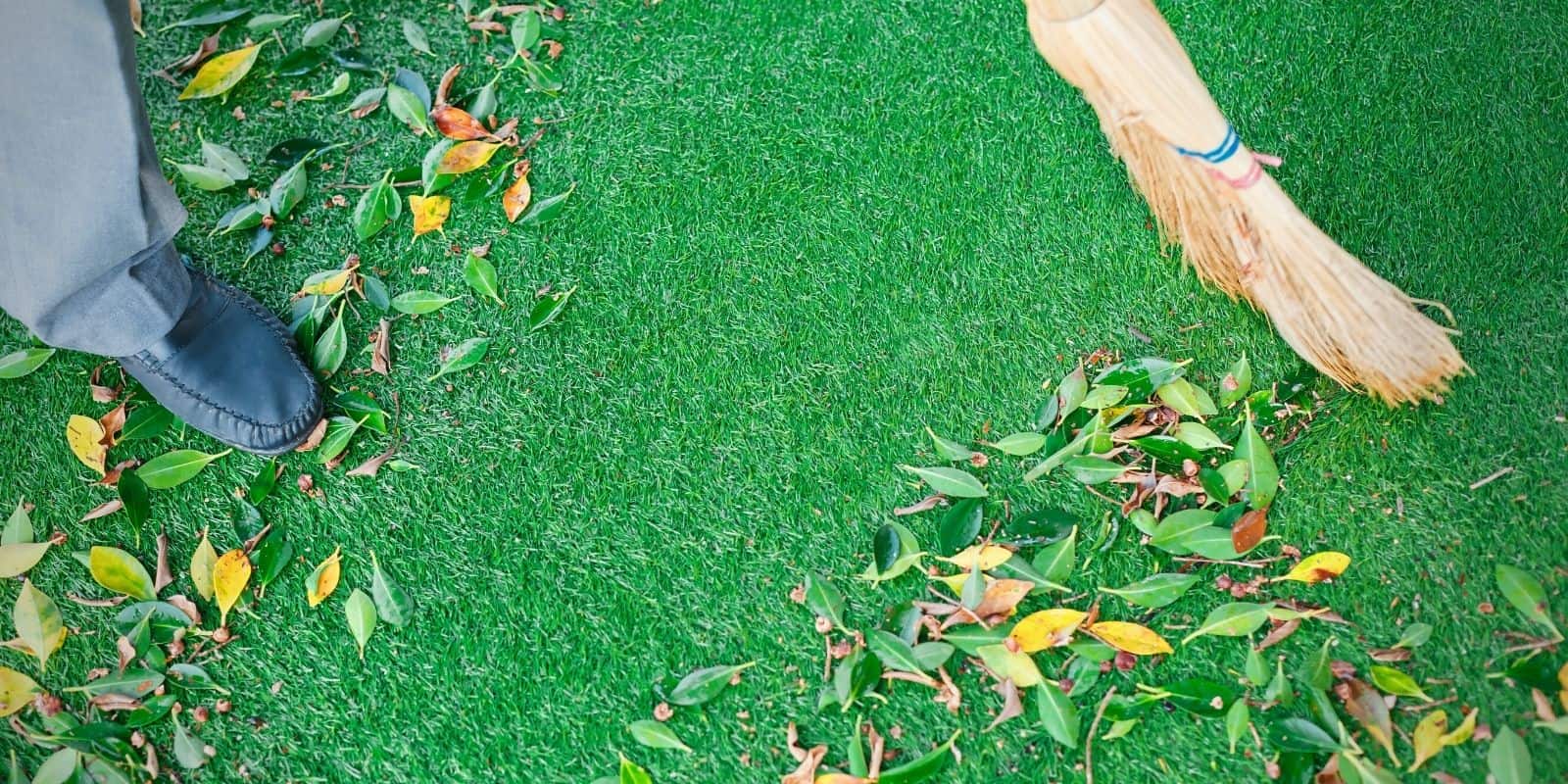
Turf Cleaning and Maintenance
Scheduled turf cleaning, decompaction, grooming, and seasonal maintenance for long-term performance.
Learn More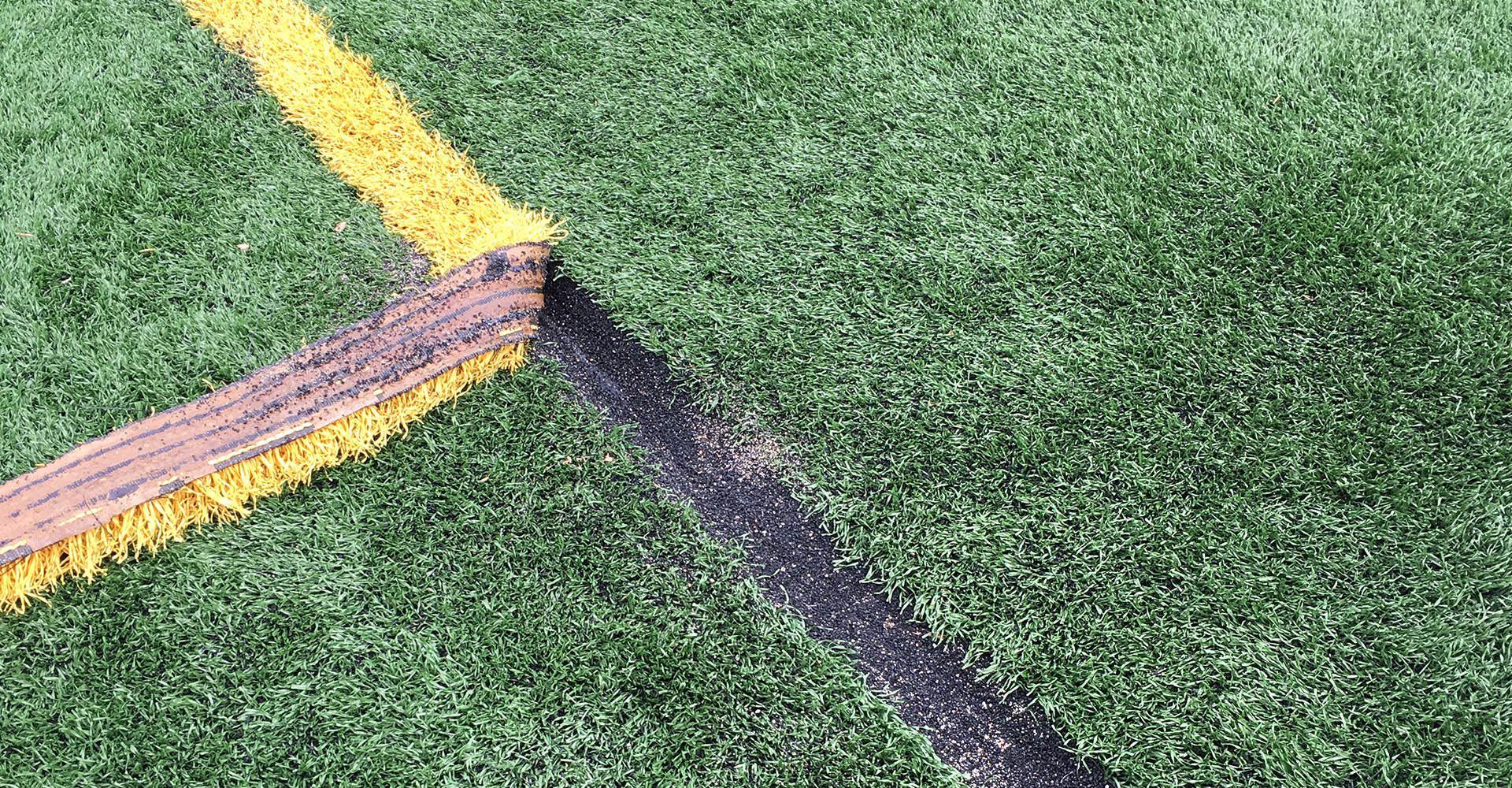
Turf Repair and Seam Fixes
Corrective repairs for lifted seams, wrinkling, edge movement, and localized wear on existing turf.
Learn MoreFrequently Asked Questions About Playground Turf Installation
Does playground turf meet safety standards for school use?
Playground turf systems can be designed to meet ASTM impact attenuation standards required for school and licensed childcare facilities. The specific infill depth required depends on the critical fall height of the equipment. We design to that standard for every institutional playground project.
How do you handle the pine needle fall that accumulates in Woodlands play areas?
Pine needles clear from synthetic turf with standard leaf blowers much more easily than from loose-fill surfaces. We factor debris management into the maintenance guidance we provide so facility staff can keep the surface clear without significant labor investment.
Can playground turf be installed around existing equipment without removing it?
Yes, in most cases. We work around existing equipment by excavating and installing base material in sections, then transitioning turf panels around equipment bases and post anchors. This avoids the cost and disruption of equipment removal and reinstallation.
Does HOA approval apply to playground turf in common areas?
Common area improvements in The Woodlands villages require coordination with the Woodlands Association and the relevant village community association. We advise HOA boards on material standards that align with ASC common area guidelines before installation begins.
Is synthetic playground turf cooler than rubber surface alternatives?
Surface temperature depends on solar exposure, infill type, and whether a shade structure is present. We provide honest guidance on temperature performance based on the specific site conditions, including the canopy shade coverage that many Woodlands common areas benefit from.
How long does a school playground turf installation take?
Typical school playground installations range from two to five days depending on play area size, equipment complexity, and access constraints. We build installation schedules around school calendar windows when possible.